

Holocaust education can unite our communities
One of the most moving events in the Parliamentary calendar every year is the Holocaust Memorial Day debate in the House of Commons.
This year was no exception as MPs from all sides joined forces to remember the six million Jewish men, women and children murdered by the Nazis and their collaborators.
And it was my duty again to highlight the excellent work being done in Rochdale’s schools to ensure that we all combat the ignorance and hatred that fuel genocides – past and present.
In the run up to the day itself, I had the honour of meeting 95‑year‑old Mala Tribich MBE. Mala and her brother Ben were the only members of their family to survive the concentration camps.
Ben was one of the 700 Jewish “Windermere Children” brought to Cumbria in 1945, many without parents.
Another of those who recovered in the Lake District was Ike Alterman, who passed away last December at the age of 97.
Ike’s story is well known to pupils at Falinge Park High School in Rochdale, which he visited three years ago.
He described picking sprouts in the freezing Polish winter for SS officers’ Christmas dinner, with nothing but straw tied to his feet for warmth.
He recalled being told he would receive a “bonus”—a ladle of warm water to make sprout soup—if he and other children sang Silent Night. “To this day I’ve never touched sprouts again,” he told them.
Ike was just 13 when his mother, sister and brother were taken away at gunpoint, never to be seen again. At Birkenau, his job was to carry bodies from the gas chambers to the crematoria. “The chimneys glowed 24 hours a day,” he said.
His testimony, captured on video during his visit, is now shown annually at the school thanks to dedicated staff such as Holocaust education lead teacher Adele Turner.
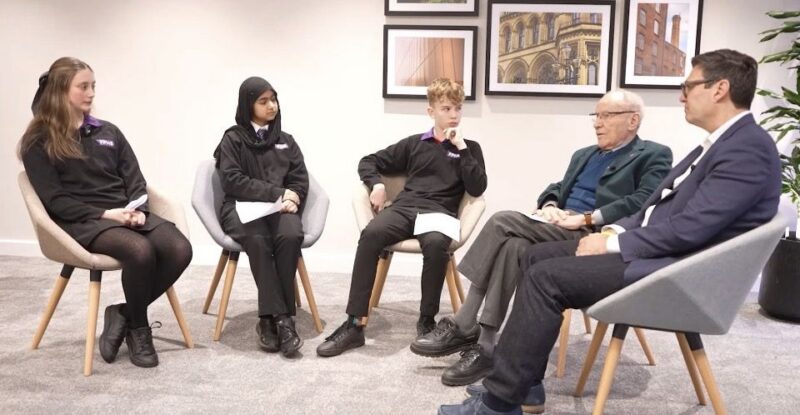
Greater Manchester’s commemoration this year once again featured Falinge Park pupils interviewing survivor Tomi Komoly BEM alongside Andy Burnham.
It’s truly inspiring that Tomi has spoken to 27,000 students over the past decade. His message to young people was simple: “Tolerance. Accept that we each have our own way of living… and live peacefully side by side.”
Yet the past year has shown that antisemitism remains a present danger. The Bondi Beach attack and the attack on Heaton Park Synagogue on Yom Kippur were both truly horrific.
Holocaust education has been part of the national curriculum for 35 years, teaching not only about the Nazi genocide but also those in Cambodia, Rwanda, Bosnia and Darfur. With young people increasingly exposed to online hate, denial and distortion, this education is more vital than ever.
Last year I visited the Srebrenica Memorial Centre in Bosnia, where more than 8,000 Muslim men and boys were murdered in 1995. The centre’s leaders were heartened to hear that Rochdale pupils learn about Srebrenica as part of their Holocaust studies.
The week before the Holocaust debate, I joined Rochdale Council of Mosques at the Kashmir Youth Project to discuss the rise in hate anti-Semitic and anti-Muslim hate crime since October 7, 2023. We need more police, better reporting and a crackdown on online hatred.
It was at that event that I met 17‑year‑old Hopwood Hall student Zeeshan Shafqat, who had sent me a poem about tackling all genocides.
I was so impressed that I read out in Parliament its key verse: “In ashes of pain, where names were erased, We stand together now, face to face/Muslim and Jew, hand in hand, Guarding the truth history demands…Never again, our shared vow remains.”